
Why You Need a Holiday Peace Plan
The holidays are supposed to be joyful — a time for family, traditions, and celebration. But when you’re grieving, they can feel like a minefield. Everywhere you turn, there are reminders of what, and who, is missing. And instead of feeling festive, you’re bracing yourself for impact. You may even be dreading the holidays or feeling a lot of anxiety.
I remember the first Christmas without my son. I thought I was holding it together until I opened a box and found a mug I had bought for him the year before. In that moment, I collapsed. Grief doesn’t care about timing. It doesn’t wait until you’re alone, or until the company has left. It just shows up. Raw, unexpected, and heavy. That mug brought me to my knees.
That’s when I learned something important: you can’t always control the grief triggers, but you can prepare for them. That’s where a Holiday Peace Plan comes in.
Why You Need a Peace Plan
Most of us go into the holidays without a plan. We hope we will be able to "just get through it." But that usually leads to exhaustion (as we feel like we have to put on a happy mask all the time), overwhelm, and even breakdowns. And when it happens, it feels like a setback.
So how can we overcome these? With a Holiday Peace Plan. A peace plan won't erase the grief, but it does give you the tools, and permission, to navigate the season with more gentle intention and less chaos.
Here is why it matters:
1. Triggers are Inevitable - But You Can Prepare
Songs, foods, decorations, traditions. Almost anything can spark a wayve of grief - even a mug. You can't predict them all, but you can make space for them. When I stumbled across that mug, I realized that pretending I could "just be fine" wasn't realistic.
When you create your own Peace Plan, you are acknowledging that grief will show up but you will have strategies to respond when it does.
Takeaway:
You don't have to fear triggers. With a plan, you can face them with more steadiness and maybe, even avoid some all together.
2. Boundaries Protect Your Energy (and Your Peace)
It's easy to say "yes" to every invitation and tradition because you don't want to disappoint others. But grief drains your energy. The truth is, you don't owe anyone your presence or performance. A Peace Plan helps you decide in advance what you will and won't do. For me, that meant skipping a large gathering one year and choosing a quiet dinner instead. And that was okay.
Now, let's get real. While you don't owe anyone your presence, you may decide to still participate in some events because you feel obligated and you care about the feelings of others. We know our family and friends have certain expectations. But, also take into account what you can handle and what you can't.
If you decide to forgo certain events to protect your energy and peace, clearly communicate your heart and feelings to your family and friends. If they care about you, they will understand. If they don't understand, then you don't owe them anything. Hard, but true.
Takeaway:
Boundaries aren't selfish - they are survival.
3. Support Makes the Burden Lighter
Grief thrives in isolation and isolation can make big feelings even harder to carry. We can find ourselves in a spiral of dark thoughts and depression.
But peace comes through connection. That Christmas, my other son and I ended up crying together when we saw the mug (after I scared him to death when I cried out upon first sight). It was painful, but it was also healing.
A Peace Plan includes safe people you can lean on. Friends, family, or even a support group. It's important to identify these important people so you're not walking alone through the season.
Takeaway:
Shared grief is often softer grief.
4. Faith and Resilience Grow Stronger with Intention
Over the years, I've built resilience through prayer, journaling, and grounding practices. These are all tools you can use to help navigate grief.
I've also learned that daily responsibilities can keep you moving - until they don't. You can't outrun grief. But, you can build faith and resilience practices into your Peace Plan. For example:
Light a candle in your loved one's memory.
Set aside five minutes for journaling each morning. Think about what you are grateful for. Be honest with how you are feeling.
Pray for strength when the day feels too heavy and overwhelming.
Takeaway:
Healing isn't accidental. It's intentional.
Closing Thoughts
Preparing a Peace Plan doesn’t mean you’re weak. It means you’re wise. It’s a way of acknowledging that grief is real, that it will show up, and that you’re choosing to care for yourself through it.
If you’re ready to create your own plan, I’d love to help. When the holidays are approached with intention and thought, you can have peace even in the midst of grief.
If you'd like to have some help (and a comforting ear) as you lay out your plan, then let's chat.
Book your Holiday Peace Plan call here. 💙
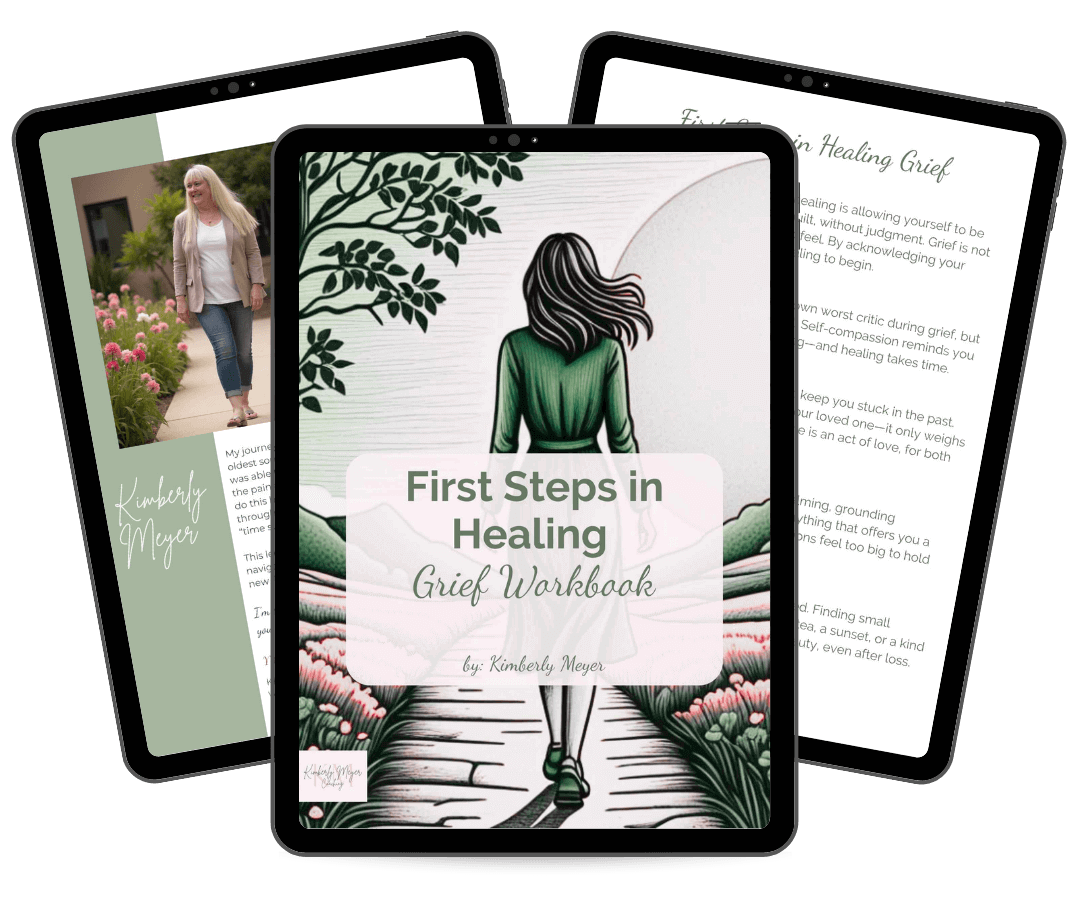
And if you’re not ready for a call, that’s okay too. You can start small by downloading my free First Steps in Healing Grief Workbook. It will help walk you through the first steps you can take in your own healing journey.
Download here: First Steps in Healing Grief Workbook
You don’t have to stumble through the holidays. With a Peace Plan, you can walk into them with more steadiness, more support, and yes — even moments of peace.