There Is No "Right Way" to Grieve - And That Is Okay
If you’ve ever wondered, “Am I grieving the right way?” let me gently remind you: there is no right way. Grief doesn’t follow a checklist or a timeline. It’s not linear. And it certainly doesn’t look the same for everyone.
I’ve lived this truth in my own life. When I lost my son at 34, the grief felt like a storm that shattered me from the inside out. It’s been three years, but the grief still shows up at times. Just recently, I lost my mom. She had been my biggest supporter and best friend, and while her passing still hurts, it has felt different — gentler, shaped by the long goodbye of dementia and the peace of knowing she was ready to meet her Lord.
Two losses. Two different journeys. Both valid. And that’s exactly why you cannot compare your grief to anyone else’s — or even to your own grief from one season of life to another.
Why Grief Looks Different for Everyone
There are so many factors that shape how we grieve:
The type of loss: Losing a child is not the same as losing a parent or losing a job. Each carries its own weight, memories, and challenges.
The depth of the relationship: A complicated bond may stir up different emotions than one rooted in closeness. I had this with the death of my biological dad (who I wasn't as close with) versus my mom (who was my best friend).
Your current resilience level: linked to whether you have had opportunities to build those coping "muscles" or not. If you've never had to navigate big challenges yet in your life then grief may show up harder. Over decades in my life, I learned coping skills through divorce, job loss, and other disappointments that helped me stay upright when my son died, even as my heart broke.
The support system you have (or don't have): Community, family, and friends can help ease the load. Or .... loneliness can make it feel unbearable.
Your faith and beliefs: For me, my Christian faith reminds me that I will see my loved ones again and that gives me a measure of comfort. Whatever your faith, it may be something you can lean on in the hard times. But ... even faith can feel shaken in grief. We might even find ourselves mad at God or pulling away for a season.
Life circumstances: Daily responsibilities can be a help or an overwhelming situation. Sometimes they can help distract us -- until they don't. Then the grief can break through.
These factors can cause different people to grieve very differently even with the “same” loss. The way that you grieve can also be very different from one grief event to another. Whatever way you grieve is valid. Your grief journey is your own!
Releasing the Pressure to “Get It Right”
One of the hardest parts of grief is the pressure, spoken or unspoken, to grieve the “right” way.
"You should be over it by now."
"Stay strong."
"Don't cry in front of the kids."
But grief doesn't follow those rules. Sometimes it's a flood of tears. Sometimes it's numbness. Sometimes it's finding a coffee mug you bought your son for Christmas and breaking down on the kitchen floor because the memory is too much. Sometimes it's ordering food from your loved one's favorite restaurant so you can spend time with them.
Every expression of grief is real. Every expression is valid. Grieving your own way isn’t weakness—it’s human.
Giving Yourself Permission to Heal
Some people are afraid to heal because they believe they may forget their loved one and lose them all over again. But healing doesn’t mean forgetting. It doesn’t mean the pain vanishes. It means allowing yourself to breathe again. It means carrying your loved one’s memory with you while slowly finding joy, peace, and purpose again.
For me, that meant turning my son’s loss into my life’s new purpose: creating a coaching practice that helps others navigate grief with intention and hope. For you, it may mean something entirely different. The point is—there is no formula. Just steps, one at a time, that help you find your way.
The key is choosing to take that first difficult step even when you may not even believe there is hope or a future. And sometimes, we may need a little help figuring out what those steps should be.
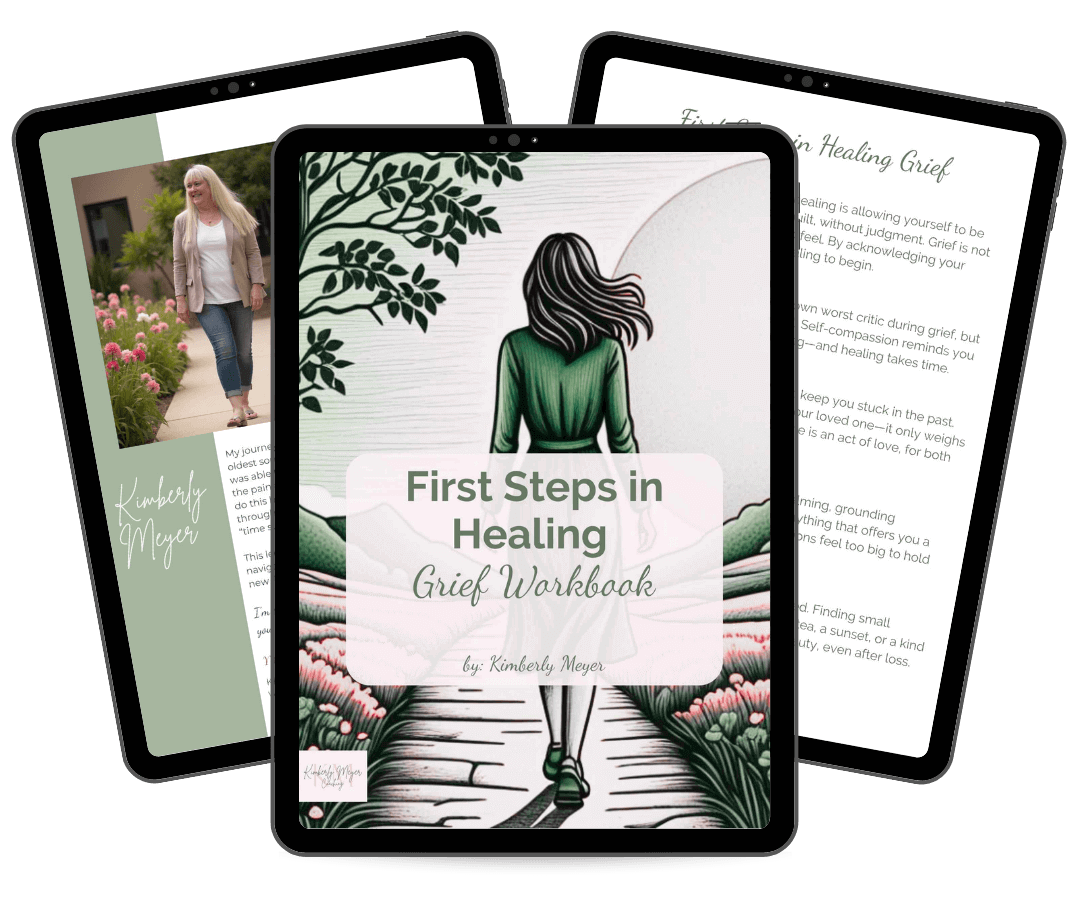
That’s why I created the First Steps in Healing Grief Workbook — a gentle guide to help you begin moving forward, not by following someone else’s roadmap, but by uncovering what healing looks like for you.
If that is you, download your free workbook here and start your journey.
Final Thought
There is no right way to grieve. There is only your way — and that's enough. Be patient with yourself. Give yourself grace. And when you need a safe place to process, know that support is waiting for you.
If you are looking for a safe and supportive community, we would love to have you in our Grief Support & Healing After Loss group.